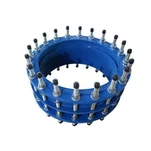
Flange adaptors are an essential component in pipelines, used to connect pipes with various flange types. They help in creating a leak-free connection between the pipe and other pipeline components such as valves or fittings. With the ability to connect pipes of different sizes, flange adaptors are versatile and widely used across various industries.
The two main types of flange adaptors are compression type and restraint type. Compression type flange adaptors use a compression ring to seal the pipe end and can accommodate a range of pipe sizes. Restraint type flange adaptors, on the other hand, are designed to restrict movement of the pipe and can prevent disconnection in high-pressure systems.
Flange adaptors are produced from different materials such as ductile iron, carbon steel, stainless steel, or PVC. The choice of material depends on the application, pressure and temperature ratings, and the medium being transported. For example, ductile iron flange adaptors have a higher pressure rating and are better suited for water or sewage applications. Stainless steel flange adaptors are often used in corrosive environments.
Installation of flange adaptors requires specialized tools and expertise. It is essential to ensure proper alignment of the pipe and flange and to tighten the bolts in the correct sequence to prevent leaks. Regular maintenance and inspection are also necessary to ensure long-term performance and prevent failure.
In summary, flange adaptors are crucial components in pipelines, providing a robust and reliable connection between pipes of different sizes and types. The choice of material, type, and installation method should be carefully considered to ensure a leak-free connection and long-term performance.