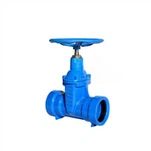
As a high-precision flow metering instrument, the volumetric piston water meter plays a crucial role in global water resource management. It achieves accurate measurement of water flow volume through the reciprocating motion of a mechanical piston and is widely used in various applications, including civil, commercial, industrial, and other scenarios.
I. Core Working Principle: The Measurement Logic of Fixed Volume Displacement
The measurement logic of the volumetric piston water meter is based on the "fixed volume displacement" principle. When water flows into the meter body, it pushes the piston to make periodic reciprocating movements in a closed metering chamber - similar to the pushing and pulling process of a syringe. Each time the piston completes a full movement, it discharges a fixed volume of water, whose volume usually ranges from 0.5 to 5 milliliters, with the specific value determined by the water meter model.
This mechanical movement is transmitted to the counter through a gear transmission mechanism, converting the number of piston movements into volume readings. Taking the common DN15 model as an example, every 1000 reciprocations of the piston, the counter will accumulate 1 liter of water. Under low-flow conditions, the piston can still maintain stable movement, which enables it to achieve accurate measurement in small flow scenarios such as dripping and leaking, with the measurement error controllable within ±2%.
II. Structural Composition and Material Selection: Collaborative Design of Precision Components
The meter body structure consists of five core parts: the meter case is cast from brass or ductile iron, with anti-corrosion and pressure-resistant properties, and the working pressure can usually reach 1.6MPa; the piston assembly is made of high-density engineering plastics or ceramic materials, and the fitting gap with the metering chamber is controlled between 0.01-0.03 mm, ensuring smooth movement while preventing water leakage.
The transmission gear set is made of wear-resistant alloy, ensuring the stability of the transmission ratio during long-term operation; the counter is divided into mechanical pointer type and electronic digital type. The former displays the accumulated water volume through gear-linked pointers, while the latter is equipped with photoelectric sensors to realize data digitization; the water inlet is usually equipped with a stainless steel filter screen, which can intercept impurities with a diameter larger than 1 mm.
The choice of materials directly affects the performance of the water meter: civil meters focus on cost-effectiveness, mostly using brass cases + plastic pistons; industrial meters need to withstand high temperatures or mild corrosion, so stainless steel cases + ceramic pistons are selected, and the applicable water temperature range can be extended to -10℃ to 90℃.
III. Performance Advantages and Application Scenarios: A Precise Metering Solution for Full Flow Range
Compared with velocity-type water meters, the significant advantage of volumetric piston water meters lies in full flow range measurement accuracy. In the flow range of 0.01-10 m³/h, the measurement error consistently remains within the limits set by national standards, making it particularly suitable for locations with complex water usage patterns. Commercial buildings, such as hotels and apartments, often experience intermittent water usage; therefore, using these water meters can effectively minimize measurement losses.
Another key advantage is their resistance to interference: impurities like sediment and rust in the water flow do not easily obstruct the piston movement, which allows for an extended maintenance cycle of 3-5 years. In older pipe networks with poor water quality, the failure rate of these meters is only one-fifth that of velocity-type water meters.
The installation method is flexible, supporting both horizontal and vertical installation as long as the piston movement aligns with the direction of gravity. Typically, the length of the meter body ranges from 100 to 200 mm, making it suitable for pipeline layouts with limited space.
IV. Maintenance and Development Trends: From Mechanical Stability to Intelligent Upgrading
There are two important points to consider for the daily maintenance of water meters. First, the water inlet filter screen should be cleaned every 2-3 years to prevent the accumulation of impurities that can affect the flow rate. Second, if you notice that the pointer is jammed, you should replace the piston sealing ring promptly. Professional testing organizations recommend calibrating water meters that have been in use for more than 8 years to ensure accuracy and avoid measurement errors caused by component wear.
With the advancement of intelligent water utilities, new-generation products have undergone digital upgrades. By incorporating IoT modules, mechanical readings can be transformed into electronic signals, enabling features such as remote meter reading and alerts for unusual water usage. Additionally, some high-end models include temperature compensation technology, which adjusts for the effect of water temperature changes on volume, further enhancing measurement accuracy.
Volumetric piston water meters, which rely on the stability of their mechanical structure and the reliability of measurement accuracy, remain one of the mainstream products in the water meter market. In today's increasingly precious water resources, it is not only a fair tool for trade settlement but also a technical cornerstone for promoting water conservation and consumption reduction.