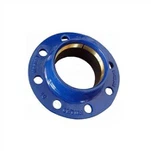
Weld neck flanges differ significantly from slip-on flanges, socket weld flanges, threaded flanges, and other types in terms of structure, performance, and applicable scenarios. Their advantages and disadvantages can be reflected through comparison:
I. Comparison with Slip-On Flanges
A hole in the middle of the flange plate characterizes slip-on flanges. After the pipe is inserted, fillet welding is performed on the outside of the flange, with a simple structure.
Advantages of weld neck flanges:
Higher strength: The neck design can evenly transfer the pipe stress to the flange, with stronger impact resistance and pressure resistance, suitable for harsh working conditions such as high pressure, high temperature, or low temperature.
More reliable sealing: The weld is far from the sealing surface, so the heat-affected zone of welding will not damage the precision of the sealing surface. Moreover, the quality of the butt weld is easier to guarantee, making it suitable for flammable, explosive, and toxic media.
Strong deformation resistance: The neck enhances the overall rigidity, which is not easy to deform under temperature changes or vibration, reducing the risk of leakage.
Disadvantages of weld neck flanges:
Higher cost: More material is used, and the processing technology is complex, needing to forge the neck and groove, so the price is usually 30%-50% higher than that of slip-on flanges.
Difficult installation: It requires precise alignment between the pipe and the flange neck, with a large amount of welding work, high requirements for welders' skills, and longer installation time.
II. Comparison with Socket Weld Flanges
Socket weld flanges are welded by inserting the pipe into the flange socket and performing fillet welding on the outside of the socket, which are often used in small-diameter, low-pressure pipes.
Advantages of weld neck flanges:
Wider application range: They can be used in large-diameter pipes and high-pressure systems, while socket weld flanges are limited by their structure in terms of diameter and pressure rating.
No Dead Angle Design: The inner wall of a pipe connected by butt welding is flush, which allows for easy media flow and retention. This makes it ideal for clean fluids, particularly in the food and pharmaceutical industries. In contrast, socket weld flanges tend to have points at the bottom of the socket that can create sanitary dead angles.
Better Long-Term Stability: Butt welds have a more uniform stress distribution, making them less susceptible to cracking from repeated pressure fluctuations. In contrast, the fillet welds used in socket welds are more likely to experience stress concentration, leading to potential leakage.
Disadvantages of weld neck flanges:
Low-cost performance in small-diameter scenarios: In low-pressure systems below DN50, socket weld flanges are easier to install and have lower costs, so the advantages of weld neck flanges are not obvious.
III. Comparison with Threaded Flanges
Threaded flanges are connected through the external thread of the pipe and the internal thread of the flange, without welding, and are suitable for non-welding or light corrosion scenarios.
Advantages of weld neck flanges:
Stronger pressure and temperature resistance: Threaded connections are prone to leakage due to thread loosening under high pressure or high temperature, while the welded structure of weld neck flanges is more stable, suitable for extreme working conditions.
Better sealing performance: Threaded connections rely on sealing tape or gaskets, which are prone to aging and failure after long-term use; the metal sealing surface of weld neck flanges fits more closely, with low leakage risk.
Disadvantages of weld neck flanges:
Limited Installation Flexibility: Threaded flanges can be easily disassembled and adjusted in direction, making them suitable for pipes that require frequent maintenance. In contrast, weld neck flanges, once welded, require cutting the pipe for disassembly, resulting in higher costs and longer construction periods.
Unsuitable for Non-Welding Environments: In areas that are flammable or explosive, such as gas pipelines, welding can pose significant safety risks. Therefore, threaded flanges are more appropriate for these environments.
IV. Summary: Core Advantages and Disadvantages of Weld Neck Flanges
Core advantages:
High strength and excellent sealing performance, resistant to extreme working conditions. This makes it suitable for pipeline systems transporting hazardous materials, ensuring stable operation over a long period.
Core disadvantages:
High cost, complex installation, difficult disassembly, and low cost performance in scenarios of low pressure, small diameter, frequent maintenance needs, or non-welding requirements.
The selection must be thoroughly evaluated based on pipe pressure, medium characteristics, diameter size, as well as installation and maintenance requirements.