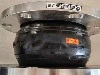
A category that gets overlooked out of habit
Working in pipe connectors for as long as we have, one thing has become increasingly clear: when customers choose main pipes, valves, or flanges, they can spend all day going through the spec sheets-material, pressure rating, sealing type, corrosion allowance-without cutting a single corner. But the moment the conversation turns to flexible universal joints, it tends to drift off lightly: "Just match one up," "Follow the pipe."
That's a misconception. However sturdy the main pipe is, what actually absorbs displacement, damps vibration, and compensates for installation tolerances in a piping system is often that unassuming universal joint. A run of pipe leaves the equipment connection, turns, climbs, passes through a wall-and if even one point along the way doesn't line up, a rigid connection means concentrated stress, while a flexible one is the way out. TianyiSuns' approach to flexible universal joints starts exactly there.
The routes on the market, and what each one costs
Flexible universal joints generally fall into a few structural routes. One is a simple ball joint with a sealing ring-compact, low-cost, but with limited angular compensation, and the seal ages quickly under frequent articulation and media attack. Another is a bellows-plus-universal-joint combination-large compensation capacity, but bellows are vulnerable to torsion and frequent deflection; mount it even slightly off-direction and service life takes a hit. Then there's the composite type with multiple seals and a limit structure-more thorough in design, but if the workmanship falls short even a little, the results fall short a lot: the finish of the sealing surface, the roundness of the ball, the fit clearance of the limit ring-cut corners on any one of them and you get leakage or seizure on site.
When selecting, looking only at "will it work" often saves money on the purchase price but pays for it in maintenance costs. Many customers only understand this after their first overhaul.
The "dumb" way TianyiSuns chose
TianyiSuns took the "dumber" path on this. Ball sealing surfaces are machined to drawing tolerance, honestly-not forced into conformity during assembly. Sealing materials are selected according to media and temperature-not one rubber compound for everything. Limit structures get an articulation test piece by piece before leaving the factory: does the angle reach spec, does it return smoothly-checked by hand, not by reading numbers off a test report.
We've always believed that for a product like a joint, a certificate of conformity only proves it "meets standard"-it doesn't prove it "works well." And the people on site can tell the difference.
Our view on this
We view the most awkward thing about the flexible universal joint category as this: once it's installed, nobody ever specifically praises it. Its entire reason for existing is "no problems." So the product logic in this trade shouldn't be "it mounts and it passes water, so we're done"-it should be "the next maintenance worker doesn't have to make an extra trip because of it."
Every TianyiSuns joint goes through a hands-on check before it leaves the factory-does the ball turn with any roughness, is the seal seated off-center, do the flange bolt holes line up? None of these affect the conclusions on the certificate, yet they are precisely the things that either make an installer's day or ruin it on site. An old installation hand said you don't need to look at anything else to judge a joint-just feel whether the flange tightens smoothly and whether the ball turns roughly, and you know. We've remembered that ever since, and we've kept it as one of our factory standards.
Straight talk for procurement and engineering customers
TianyiSuns' flexible universal joints cover a range of material and sealing combinations, selectable by media, temperature, pressure rating, and compensation angle, with interface dimensions and flange standards adjustable to drawing. Samples can be arranged for hands-on inspection-this is the kind of product where looking at a catalog and holding it in your hands, turning it, feeling it resist, are two entirely different experiences. Lead times and minimum order quantities are project-based, and we're happy to support small-batch trial installations.
In closing
That small joint at every bend in the piping is never the star of the show. But whether a system runs steadily over the long haul sometimes depends on it. TianyiSuns is willing to put in a little extra unglamorous effort on this small thing, because whether it's worth it isn't measured by the price of a single joint-it's measured by whether someone, somewhere, avoided a shutdown or a climb through a pipe rack because of it.