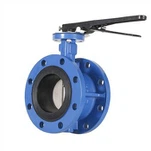
In industrial piping systems, double flanged bends are key pipe fittings used to realize pipe direction changes and connections. Their stability directly affects the safety and efficiency of the system. Affected by factors such as installation, medium, and environment, they often experience leakage and corrosion failures, which require targeted handling.
I. Core Failure 1: Leakage
Leakage mainly occurs at the flange sealing surface and connecting bolts, and in a few cases, it is caused by cracks in the fitting body. The causes and solutions are as follows:
(I) Causes of Leakage
Unstandardized Installation: Impurities such as oil stains and welding slag remain on the sealing surface, resulting in fitting gaps; uneven bolt tightening causes flange warping or gasket crushing; deviations in flange parallelism lead to local stress on the gasket.
Sealing Component Issues: The gasket material is incompatible with the medium's corrosion, temperature, and pressure; long-term operation causes aging and wear of sealing components, expanding the sealing gap.
Structural Damage: The pipe fitting has defects such as air holes and cracks during manufacturing; pipeline vibration or external impact leads to flange loosening and fatigue cracks in the body.
(II) Solutions
Standardize Installation: Clean the sealing surface with acetone before installation; polish rusted surfaces until the roughness reaches Ra ≤ 3.2μm; tighten bolts in accordance with the "cross-bolting, step-by-step tightening" principle using a torque wrench, complying with the GB/T 9124 standard; calibrate flange parallelism with a dial indicator, controlling the deviation within 0.1mm/m.
Scientific Selection and Replacement of Sealing Components: Use metal wound gaskets for high-temperature and high-pressure conditions, PTFE or Hastelloy gaskets for strong corrosion, and NBR gaskets for low-pressure and low-temperature conditions; replace ordinary rubber gaskets every 1-2 years and metal gaskets every 3-5 years, and check their integrity during maintenance.
Inspection and Protection: Detect defects in pipe fittings using UT (Ultrasonic Testing) or PT (Penetrant Testing) before installation to ensure compliance with size requirements; install shock absorbers at the pump-end of the pipeline, set supports on both sides of the bend, and re-tighten bolts regularly.
II. Core Failure 2: Corrosion
Corrosion results from improper selection of medium, environment, and material, and includes types such as uniform corrosion and pitting corrosion. Details are as follows:
(I) Causes of Corrosion
Medium Corrosion: Acidic, alkaline, or oxidizing media react directly with carbon steel, thinning the pipe wall; chloride ions in the medium damage the alloy passivation film, causing electrochemical corrosion (pitting corrosion, crevice corrosion).
Environmental Corrosion: In outdoor or salt spray environments, moisture and salt in the air form electrolytes, causing atmospheric corrosion; under high-temperature conditions, the fitting reacts with oxygen to form easily peelable oxide scales, accelerating corrosion.
Inappropriate Material Selection: Using ordinary carbon steel instead of corrosion-resistant materials in corrosive working conditions; insufficient material purity, where impurities such as sulfur and phosphorus reduce corrosion resistance.
(II) Solutions
Optimize Material Selection: Use carbon steel for weak corrosion, 304/316L stainless steel for moderate corrosion, Hastelloy or FRP (Fiberglass Reinforced Plastic) for strong corrosion, and Inconel 600 alloy for high-temperature corrosion; require material certificates during procurement and conduct spectral analysis to verify composition.
Anti-Corrosion Protection: For outdoor carbon steel bends, use "epoxy zinc-rich primer + polyurethane topcoat" (with a thickness of ≥ 200μm) or hot-dip galvanizing; line the inner wall of pipelines carrying corrosive media with PTFE, rubber, or ceramics.
Parameter Control and Inspection: Install filters when chloride ion content in the medium is too high; add neutralizers to adjust pH for acidic media; install rain shields for outdoor bends and conduct regular cleaning and touch-up painting in chemical plant areas; use ultrasonic thickness gauges and PT/ET (Eddy Current Testing) for inspection every six months, and establish files to predict service life.
III. Summary
The leakage and corrosion failures of double flanged bends are essentially the result of mismatches among "material properties, installation process, and working conditions". To achieve long-term stable operation, the principle of "prevention first, comprehensive management" must be followed:
Early Selection Stage: Accurately match the fitting material and sealing components, and determine the optimal solution based on the medium's temperature, pressure, and corrosiveness;
Installation and Commissioning Stage: Strictly implement standardized processes to ensure that flange parallelism, bolt tightening torque, and sealing surface cleanliness meet standards.
Operation and Maintenance Stage: Conduct regular inspections of sealing components and corrosion detection, and promptly address minor hidden dangers to prevent the expansion of failures.
Through full-lifecycle refined management, the failure rate of double flanged bends can be reduced, ensuring the safe and efficient operation of industrial piping systems.