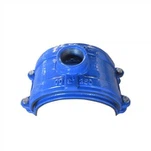
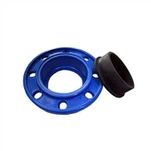
PVC saddle clamps are widely used for branch connections on main pipelines in water supply, irrigation, chemical processing, and water treatment applications. During actual use, issues such as leakage, cracking, or bolt loosening may occur due to improper installation, material aging, or changes in operating conditions. The following are common issues and their corresponding solutions.
1. Leakage at the Connection
This issue is characterized by water droplets or continuous leakage at the contact surface between the saddle clamp and the main pipe. Main causes include improper installation or displacement/damage of the gasket, an uneven or scratched outer surface of the main pipe with contaminants, and insufficient or uneven bolt tightening torque. Solutions include: disassembling and inspecting the gasket for integrity and replacing it if necessary, cleaning the outer surface of the main pipe to remove oil, dirt, and burrs, tightening bolts evenly in a cross pattern to the specified torque, and conducting a hydrostatic pressure test after installation to confirm no leakage before putting the system into service.
2. Cracking of the Clamp Body
This issue is characterized by visible cracks on the saddle clamp body, which may lead to fracture in severe cases. Main causes include over-tightening of bolts resulting in localized stress concentration, low ambient temperature reducing the toughness of PVC material, pressure fluctuations in the piping system exceeding the product's rated pressure range, and prolonged exposure to ultraviolet radiation or corrosive chemical environments. Solutions include: using a torque wrench to tighten bolts to the specified value to avoid over-tightening, avoiding impact or forced assembly during construction in low-temperature environments, confirming that the system operating pressure matches the saddle clamp's rated pressure, and applying UV protection or shielding measures for outdoor installations, or selecting UV-resistant materials.
3. Bolt Loosening or Corrosion
This issue is characterized by noticeable loosening of bolts after a period of operation or rusting of metal bolts. Main causes include vibration or pressure pulsation in the piping system leading to self-loosening of threads, failure to use washers or lock nuts, and differences in thermal expansion coefficients between metal bolts and PVC material. Solutions include: selecting nuts with a locking design or applying thread-locking compound, conducting regular inspections and re-tightening bolts every six months, and using stainless steel bolts in humid or corrosive environments.
4. Misalignment of the Hole Position
This issue is characterized by misalignment between the hole drilled in the main pipe and the saddle clamp outlet, affecting the branch pipe connection. Main causes include inaccurate measurement and positioning before drilling, and drill bit slippage during the drilling process. Solutions include: marking cross-centerlines on the main pipe before drilling, using a center punch or pilot drill to assist with starting, slightly adjusting the installation angle of the saddle clamp if the misalignment is minor, and replacing the pipe section or using a reducing coupling to compensate if the misalignment is severe.
5. Aging of the Gasket
This issue is characterized by hardening, cracking, or loss of elasticity of the gasket after long-term use, leading to leakage. Main causes include the gasket material being unsuitable for the service medium or temperature conditions, and exceeding the normal service life. Solutions include: selecting gasket materials resistant to medium corrosion, and performing preventive replacement according to recommended interval, typically every 3 to 5 years.