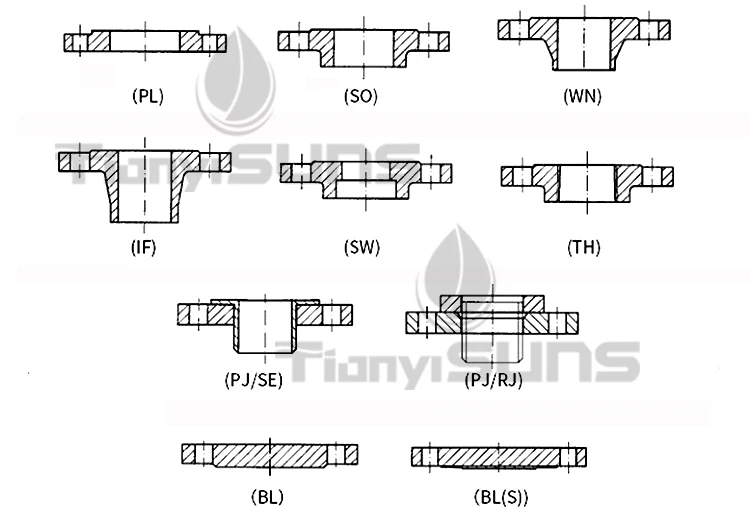
Socket weld flange simplified as SW flange, it has a recessed area (like a shoulder) in the flange bore, this shoulder serves as a guide to set the depth of the pipe that inserted to the flange. Socket welding flange initially designed for high pressure small diameters piping system.
Insert the pipe end into socket weld flange, until the pipe bottom touch the shoulder area, pull back 1.6mm (1/16'') distance of the inserted pipe then do fillet welding. The point is to create a expansion gap (1 fillet weld) between the flange and the pipes or fittings.
How is Socket Welding Flange Generated
The socket welding flange was firstly to use for stainless steel superheater, due to avoid cracking defects caused by thermal stresses in heating processes, and after years development it became a standard applications for all types of material.
Socket Welded Flange Face Types
Socket welded flange inlcuding RF type and RTJ type, which like other types of welding flanges (slip on, weld neck or blind flange).
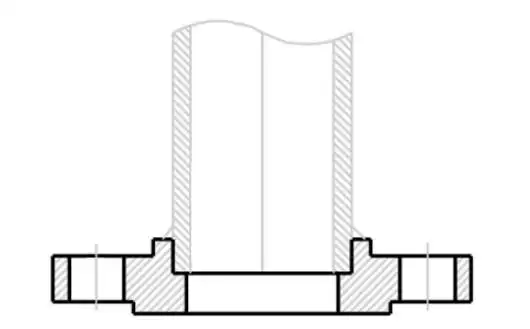
RF Type
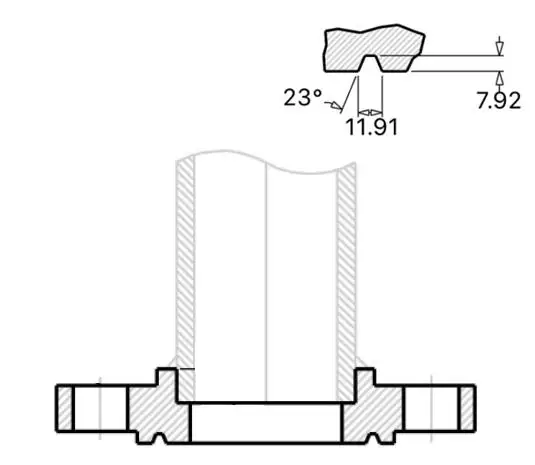
RTJ Type
Socket welded flange shape is similar to slip on flange, differently it has a shoulder at the inner bore.
|
Size
|
1/2″ to 48″ DN10~DN5000
|
|
Flange Standards
|
ANSI, MSS, AWWA, DIN, UNI, JIS, BS, EN1092, GOST, SABS
|
|
Pressure Rating
|
Class 150 LBS, 300 LBS, 600 LBS, 900 LBS, 1500 LBS, 2500 LBS
|
|
ANSI B16.5
|
6Bar 10Bar 16Bar 25Bar 40Bar / PN6 PN10 PN16 PN25 PN40, PN64
|
|
JIS
|
5K, 10 K, 16 K 20 K, 30 K, 40 K, 63 K
|
|
UNI
|
6Bar 10Bar 16Bar 25Bar 40Bar
|
|
EN
|
6Bar 10Bar 16Bar 25Bar 40Bar
|
|
Coating
|
Oil Black Paint, Anti-rust Paint, Zinc Plated, Yellow Transparent, Cold and Hot Dip Galvanized
|
|
Process
|
Forged
|
|
Test Certificates
|
Raw Materials Certificate
100% Radiography Test Report Third Party Inspection Report, etc |
|
Production technique
|
Forged, Heat treated and machined
|
|
Types
|
Weld Neck, Blind, Slip-On, Socket-Weld, Threaded, Orifice, Spectacle Blinds
|
|
Uses & application
|
Bitumen upgraders.
Heavy oil refineries.
Nuclear power (mostly seamless). Petrochemicals and acids. |


Working Principle
It forms a firm connection by inserting the pipe into the socket of the flange and then welding it in place. During welding, fillet welds are performed at the pipe end and the outer side of the flange, and sometimes internal welding is done in high-stress applications to increase the strength and tightness of the connection. This connection method can effectively transmit pressure and force, ensuring the safe operation of the pipeline system.
Advantages and Disadvantages
Advantages: The welding process is relatively simple, easy to operate, and the welding quality is easy to guarantee; compared with threaded flanges, it reduces the risk of leakage; since welding is performed externally, it will not cause damage to the inside of the pipeline, which is beneficial to the flow of the medium; it has high strength and tightness, and can withstand high pressure and vibration.
Disadvantages: Installation and disassembly are relatively difficult, requiring professional welding equipment and technical personnel; once welding is completed, if the flange or pipeline needs to be replaced, the maintenance cost is high; it is not suitable for occasions that require frequent disassembly and installation; for large-diameter pipelines, the manufacturing and installation costs of socket weld flanges are high.
Structural Features
Connection Method: The end of the pipe is inserted into the stepped part of the flange ring, and welding is performed at the pipe end and the outer side. There are two types: necked and non-necked. The necked pipe flange has good rigidity and small welding deformation.
Size Specifications: It generally applies to small-diameter pipes, typically ranging from 1/2 inch (DN15) to 3 inches (DN80), though some standards may reference a larger size range.
Application Fields
Petrochemical Industry: In processes such as petroleum refining and chemical production, it is used to connect various pipelines to transport petroleum, chemical raw materials, intermediate products, and finished products, such as crude oil transmission pipelines and connecting pipelines between chemical product reactors.
Power Industry: It is utilized in steam, feedwater, and circulating water pipelines of power plants, capable of withstanding high-temperature and high-pressure environments to ensure stable power production.
Shipbuilding Industry: It is commonly used in power systems, fuel systems, and seawater cooling systems on ships to connect various pipelines, ensuring the normal navigation of vessels and the proper operation of equipment.
Pharmaceutical Industry: It is used for connecting pipelines between pharmaceutical equipment, requiring good tightness and corrosion resistance to ensure the hygiene and safety of the pharmaceutical production process.
Food and Beverage Industry: In food processing and beverage production, various fluid transmission pipelines are used to transport substances like milk, fruit juice, and beer. The materials used for these pipelines must comply with food hygiene standards, ensuring that the connections are secure and well-sealed.
Hot Tags: socket weld flange, China socket weld flange suppliers, manufacturers, weld neck flange, Rotary Piston Liquid Sealed Class C Volumetric Water Meter, stainless steel flange, ISO4064 Class B Multi Jet Water Meter, ISO4064 IC Card Prepaid Water Meter, steel flange