In pipeline installation, traditional connection methods are complex and time-consuming. The emergence of quick adapters has brought about a new revolution in pipeline connections.
Concept and structural features
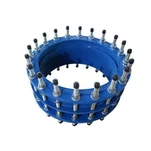
Quick adapters are designed to rapidly connect or convert pipelines, making installation, maintenance, and renovation processes simpler. Their structure is simple and effective, consisting of a main body, sealing elements, and connection mechanisms. The main body is typically a short pipe made of metal or high-strength plastic, with interfaces at both ends that fit the pipes. Sealing elements, such as rubber sealing rings, are installed in the interfaces to prevent fluid leakage.
Common connection mechanisms include clamp type and push-in type. Take the clamp type as an example; at the interface, a ring-shaped groove is paired with a clamp, and the pipes are fixed by tightening bolts or quick-release clips, ensuring a firm connection and pressure resistance.
Application scenarios
Temporary pipeline connections: On construction sites, quick adapters allow workers to quickly connect pipes of different specifications when setting up temporary water supply or drainage systems. They are also easy to disassemble after the project is completed.
Maintenance and component replacement: In factory cooling water networks, when a pipe leaks, a quick adapter can quickly isolate and replace the damaged section without waiting for the weld to cool, significantly reducing maintenance time and minimizing the impact on production.
Conversion connections between different pipe materials: In the renovation of existing buildings, it is essential to connect pipes made of different materials. Quick adapters can provide reliable connections and ensure a consistent flow of fluids.
Significant advantages
Efficiency: Installation is simple and fast. For example, with a push-in type quick adapter, the connection is completed by inserting the pipe into the appropriate position, far exceeding the speed of traditional threaded connections.
Flexibility: They can accommodate pipes of various specifications and materials, including both metal and plastic, whether they are small or large-diameter pipes.
Repeatability: They can be disassembled and reassembled multiple times without significant performance degradation, making them suitable for pipeline systems that require frequent adjustments and renovations.
Comparison with traditional connection methods
Compared with welding: Welding requires professional equipment and personnel, and the process has high-temperature risks. Moreover, welded pipes are difficult to disassemble after installation, which is not conducive to maintenance and renovation. Quick adapters do not require professional welding equipment, and ordinary workers can operate them after simple training. They are also easy to disassemble and reassemble.
Compared with threaded connections: When connecting large-diameter pipes with threaded connections, the processing and connection processes are cumbersome, and they are prone to loosening over long-term use. Quick adapters are more convenient for connecting large-diameter pipes, with dual guarantees from sealing elements and connection mechanisms, reducing the risk of loosening and leakage.
With their unique design, wide range of applications, and significant advantages, quick adapters have become key components in modern pipeline systems. As technology advances, they will play an increasingly important role in more fields, providing strong support for the efficient and stable operation of pipeline engineering.