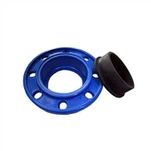
In the vast world of mechanical transmission, the flexible universal joint is like an agile dancer. With its unique structure and excellent functions, it achieves efficient power transmission under different working conditions and occupies a pivotal position in numerous fields.
The core function of the universal joint is to ensure reliable power transmission under complex working conditions where the two shafts intersect or the relative position changes continuously. Its working principle stems from a sophisticated mechanical structure design. Through movable connecting parts and special kinematic pairs, it conveys the motion of the driving shaft to the driven shaft with ease. When there is an angle between the two shafts, the components of the universal joint will simultaneously swing and rotate during the motion, thus skillfully adjusting the direction of power transmission and ensuring uninterrupted power transmission. This process is just like a highly skilled dancer gracefully changing movements on a complex stage, always maintaining the coherence and smoothness of the performance.
In the operation of the pipeline system, the flexible universal joint also plays an indispensable role. Its core function focuses on compensating for the displacement and angular deviation of the pipeline caused by factors such as thermal expansion and contraction, installation errors, foundation settlement, and mechanical vibration. When the pipeline expands and contracts due to temperature changes, the universal joint can flexibly rotate and displace by itself, effectively preventing the pipeline from cracking due to stress concentration. When there is an angular deviation in pipeline installation, it can ensure the smooth transportation of the medium and prevent situations such as an increase in fluid resistance and leakage caused by angular problems.
There are various types of flexible universal joints applied in the pipeline system. The universal joint made of rubber stands out for its excellent flexibility and shock-absorbing performance. It can effectively reduce pipeline vibration and noise, and is widely applicable to pipeline systems with strict requirements for vibration control, such as water supply and drainage, and air conditioning. The metal bellows universal joint has strong compressive capacity and can withstand high temperature and pressure, and is widely used in industrial pipelines for high-temperature and high-pressure fluids. The spherical universal joint, with its flexible rotation characteristics, can achieve displacement compensation of the pipeline within a large angular range and is often used in special pipeline connection scenarios where the direction needs to be changed frequently.
The actual application scenarios of the universal joint cover various fields. In the field of industrial pipelines, the high-temperature and high-pressure pipelines in petrochemical plants experience frequent temperature fluctuations during the production process. The universal joint can effectively alleviate the adverse effects of pipeline thermal deformation and ensure the safe transportation of chemical raw materials and products. The steam pipelines in thermal power plants have obvious pipeline expansion and contraction due to high steam temperature and high pressure. The application of the universal joint can greatly reduce the damage at the pipeline connection points and significantly improve the system stability. In terms of urban public pipelines, the water supply and drainage pipeline system often experiences displacement due to foundation settlement. The universal joint can absorb these displacements, maintain the normal operation of the pipeline, and avoid problems such as water leakage and blockage caused by pipeline misalignment. In the automotive industry, the universal joint is a key component of vehicle power transmission, directly affecting the handling performance and driving stability of the vehicle. Whether it is a family car for daily commuting or a high-performance sports car on the track, the universal joint silently ensures the smooth transmission of power.
The universal joint has remarkable advantages. It can adapt to a large angular difference between shafts, with a maximum of 35° - 45°, which is difficult for ordinary couplings to achieve. At the same time, during the power transmission process, it can effectively compensate for the relative displacement between shafts caused by factors such as installation errors and deformation during operation, greatly improving the reliability and stability of the transmission system. However, during the use of the universal joint, its maintenance cannot be ignored. It is necessary to regularly check its wear condition and lubrication status, and replace the worn parts promptly to ensure its performance and service life.
Compared with its application in the mechanical transmission system, the flexible universal joint in the pipeline system focuses more on compensating for the displacement and angular changes of the pipeline to ensure the tightness and stability of medium transmission. In mechanical transmission, the universal joint mainly realizes the flexible transmission of power. Although the application focuses are different, both are of vital significance to the normal operation and service life of the equipment.
With the rapid development of science and technology, the universal joint is also continuously innovating and changing. In the future, more lightweight, efficient, and intelligent universal joints will emerge, further improving system performance, injecting more powerful power and more flexible motion capabilities into various fields, and continuing to write new legends in mechanical transmission, pipeline systems, and other fields.