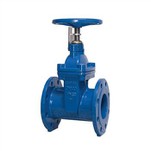
In the overhead pipeline systems of petrochemical plants, when high-temperature media flow through 90-degree bends, the self-weight of the pipeline and thermal expansion stress often cause supports to deform or even leak. At this critical juncture, the double flange 90° duck foot bend stands out as a vital component for addressing engineering challenges. Its unique design combines flange connections with duck-foot supports. This pipe fitting not only redirects the flow of the medium but also supports loads, serving as the "stable joint" of the pipeline system. It effectively changes the flow direction while distributing loads through its bottom support structure. This design demonstrates invaluable engineering benefits, especially in complex conditions like high pressure and vibration.
1. Basic Concepts and Structure
The double flange 90° duck foot bend is a common pipe fitting in industrial pipeline systems, named after its appearance:
"Double Flange": Both ends are equipped with flanges, connected to pipes or equipment via bolts for easy installation, disassembly, and sealing.
"90° Duck Foot Bend": The main body is a 90-degree elbow, with a support structure resembling "duck feet" extending from the bottom to share pipeline weight and stress, enhancing installation stability.
2. Core Functions and Application Scenarios
Functional Features
Directional Connection: Achieves 90° redirection, adapting to complex pipeline layouts.
Load-bearing Support: The bottom "duck foot" structure can be fixed to the ground or supports, reducing deformation and vibration caused by self-weight, medium flow, or thermal expansion.
Reliable Sealing: The double-flange design, combined with gaskets, suits high-pressure, high-temperature, or corrosive media.
Application Fields
Industrial pipeline systems include petrochemical, natural gas, power, metallurgy, and water supply and drainage.
Typical scenarios involve supporting sections of overhead pipelines, handling pipeline branches with heavy loads, and managing inlets or outlets of vibrating equipment such as pumps and compressors.
3. Installation and Maintenance Key Points
Installation Notes
Positioning Calibration: Ensure the duck foot support surface is horizontal and flanges are perpendicular to the pipeline axis to avoid uneven bolt stress.
Support Fixing: "Duck feet" must be anchored to concrete foundations or steel structures via anchor bolts, matching the pipeline's load-bearing capacity.
Sealing Treatment: Select appropriate gaskets, such as spiral wound and rubber, at flange connections. Tighten bolts uniformly to the specified torque.
Maintenance and Inspection
Regularly check for leaks at flanges and cracks deformation in support structures.
In corrosive environments, monitor material corrosion and apply anti-corrosion coatings as needed.
4. Key Parameters
Nominal Diameter (DN): Typically ranges from DN25 to DN1200, with custom sizes available.
Pressure Ratings: Compliant with ANSI, API, JIS, GB, etc., common classes, PN16, PN25, Class150, Class300.
Materials: Carbon steel, stainless steel, alloy steel, or special materials per medium characteristics.
5. Differences from Other Pipe Fittings
vs. Ordinary 90° Elbows: Ordinary elbows lack supports, requiring extra brackets; duck foot bends integrate support to reduce installation complexity.
vs. Expansion Bends: Expansion bends focus on thermal deformation compensation, while duck foot bends prioritize load-bearing and redirection-both can be combined for complex conditions.
6. Selection Reference Factors
Medium properties (temperature, pressure, corrosiveness);
Pipeline system load requirements (self-weight, medium weight, vibration);
Installation space and support conditions;
Industry standards and compliance (e.g., special certifications for chemical/petrochemical sectors).
The design core of the double flange 90° duck foot bend lies in integrating redirection and structural support, suitable for industrial pipelines requiring stable load-bearing. During selection and installation, align with operational parameters and standards to ensure system safety. In the trend of intelligent, long-cycle industrial pipeline networks, such integrated fittings symbolize not only mechanical components but also the epitome of reliability design in pipeline systems.