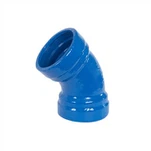
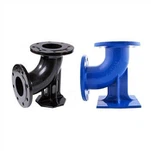
As a core component of municipal water supply networks, rural water transmission systems, and industrial water distribution pipelines, ductile iron water pipes are widely recognized for their long service life and stable performance. Their durability-defined by resistance to external damage, corrosion, and material aging-directly determines the operational reliability and lifecycle cost of water infrastructure. A comprehensive analysis of their durability requires examining material properties, environmental adaptability, structural design, and maintenance strategies.
Material Properties: The Foundation of Durability
Ductile iron, produced by adding nodulizers to cast iron, exhibits mechanical properties superior to traditional gray cast iron, laying the groundwork for long-term durability. Its high tensile strength (≥420MPa) and elongation rate (≥10%) enable it to withstand external loads such as soil pressure, vehicle traffic impact, and thermal expansion without cracking-an advantage over brittle gray cast iron pipes that are prone to breakage under stress. Additionally, the dense crystalline structure of ductile iron reduces water penetration and medium erosion, minimizing internal material degradation over time. For example, in urban road underpass pipelines, ductile iron pipes can maintain structural integrity even when subjected to repeated heavy truck loads, whereas PVC pipes may deform or crack under similar conditions.
Environmental Adaptability: Resisting Corrosion and Extreme Conditions
Corrosion is a primary threat to pipeline durability, and ductile iron water pipes demonstrate strong resistance to both internal and external corrosion through material optimization and protective treatments.
External corrosion resistance: Most ductile iron water pipes are coated with zinc-rich paint or polyethylene sleeves. The zinc coating acts as a sacrificial anode, preventing the iron base from reacting with soil moisture and electrolytes; the PE sleeve further isolates the pipe from corrosive soils. In a 10-year study of coastal water supply projects, zinc-coated ductile iron pipes showed only 0.1mm of surface corrosion, far less than the 0.5mm corrosion rate of uncoated carbon steel pipes.
Internal corrosion resistance: For pipelines conveying soft water or water with high chloride content, internal linings such as cement mortar or epoxy resin are applied. The cement mortar lining forms a smooth, alkaline surface that inhibits the formation of rust scales and biological slimes, while epoxy linings provide inert protection against chemical erosion. In water treatment plants, epoxy-lined ductile iron pipes have maintained unobstructed flow for over 20 years, with no signs of internal corrosion or flow reduction.
Extreme temperatures also test durability. Ductile iron's low-temperature toughness prevents freezing-induced cracking in cold regions, unlike PVC pipes that become brittle and break in sub-zero temperatures. In hot climates, its high thermal stability avoids deformation caused by prolonged exposure to high temperatures, ensuring consistent water flow.
Structural Design: Enhancing Durability Through Joints and Thickness
The structural design of ductile iron water pipes-particularly joints and wall thickness-further extends their durability.
Joints: Push-in joints are the most common design, featuring elastic rubber gaskets that adapt to minor pipe displacement while maintaining a tight seal. Unlike rigid flange joints that may leak due to settlement, push-in joints allow 3-5 degrees of angular deflection, reducing stress concentration at connection points. In rural areas with uneven terrain, this flexibility prevents joint leakage caused by soil movement, a common failure mode in rigid pipeline systems.
Wall thickness: Ductile iron pipes are designed with graded wall thickness based on application pressure. The increased wall thickness not only enhances pressure-bearing capacity but also provides a larger corrosion allowance-even if minor corrosion occurs, the remaining wall thickness ensures the pipe meets safety standards. For instance, Class 150 ductile iron pipes with a nominal wall thickness of 8mm can still operate safely after 20 years of use, as the remaining thickness exceeds the minimum required for water pressure.
Maintenance Strategies: Prolonging Lifespan Through Proactive Care
While ductile iron water pipes have a design life of 50-100 years, proactive maintenance can further extend their durability. Regular inspections using non-destructive testing detect early signs of corrosion or wall thinning, allowing for targeted repairs such as local lining replacement. Flushing the pipeline periodically removes sediment and biological deposits, preventing internal blockages and corrosion acceleration. In addition, avoiding overloading the pipe's surroundings reduces external stress damage. A municipal case study showed that ductile iron pipes with annual inspection and flushing programs had a service life extended by 15-20 years compared to unmaintained pipes.
Conclusion
The durability of ductile iron water pipes stems from a combination of superior material properties, robust environmental protection, optimized structural design, and proactive maintenance. Its ability to resist corrosion, external loads, and extreme temperatures makes it a cost-effective choice for water infrastructure, reducing replacement frequency and maintenance costs. As urbanization and water demand grow, ductile iron water pipes will continue to play a key role in building long-lasting, reliable water supply systems.